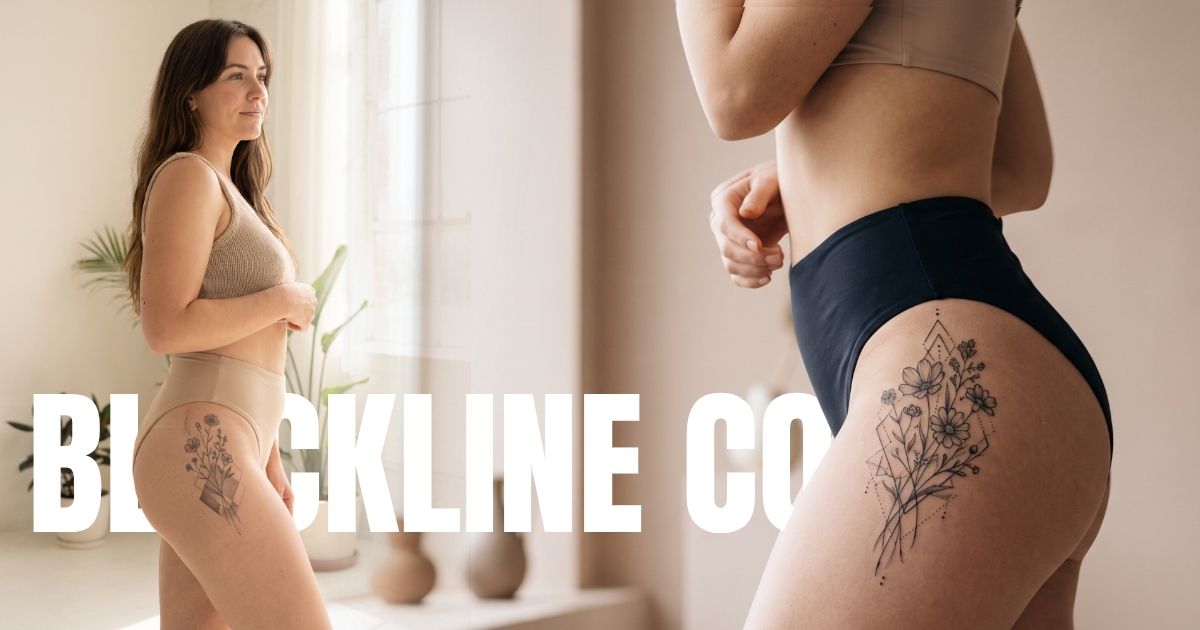
If you’re looking for hip tattoo ideas, you’re in the right place. This guide shows 30+ design ideas, explains the best placements, breaks down pain levels, and explores what hip tattoos can mean. Whether it’s your first tattoo or you’re adding to your collection, these hip tattoo ideas will help you choose a design you’ll love.
By the end, you’ll have a clear shortlist of styles and know exactly what to discuss with your tattoo artist.
Popular Hip Tattoo Designs

Hip tattoos work with almost any style, from tiny minimal pieces to larger designs that flow around your body. Below are some of the most popular types of hip tattoo ideas, with notes on who they suit and what size they usually work best at.
Floral Hip Tattoos
Floral designs are one of the most common choices for the hip. They can be soft and romantic or bold and dramatic, depending on the flowers and style.
- Who it suits: Great for people who want a feminine, elegant, or nature-inspired look. Also good for first-timers who still want something noticeable.
- Typical size & style: Small to medium. Single flowers (roses, lilies, cherry blossoms), small bouquets, or vines that follow the curve of the hip.
- Design tip: Let the stems or leaves wrap slightly around the side for a natural flow.

Minimalist Line Art
Minimalist tattoos use simple lines and shapes to create clean, subtle designs. They’re perfect if you want something that’s easy to hide but still meaningful.
- Who it suits: Ideal for first-timers, people who need to hide tattoos for work, or anyone who prefers understated ink.
- Typical size & style: Small. Fine-line drawings, single-line shapes (hearts, moons, waves), tiny symbols, or micro tattoos.
- Design tip: Keep details simple so the tattoo ages well and stays clear over time.

Geometric Patterns
Geometric hip tattoos use shapes, lines, dots, and symmetry to create modern, structured designs. They often look especially good on the hip because they can follow the body’s natural curves.
- Who it suits: People who like modern, clean, or slightly edgy styles. Works well if you enjoy symmetry and patterns.
- Typical size & style: Medium. Mandalas, triangles, dotwork, linework that wraps around the side hip or sits over the hip bone.
- Design tip: Ask your artist to adjust the pattern so it complements your body shape instead of fighting against it.

Script & Quote Tattoos
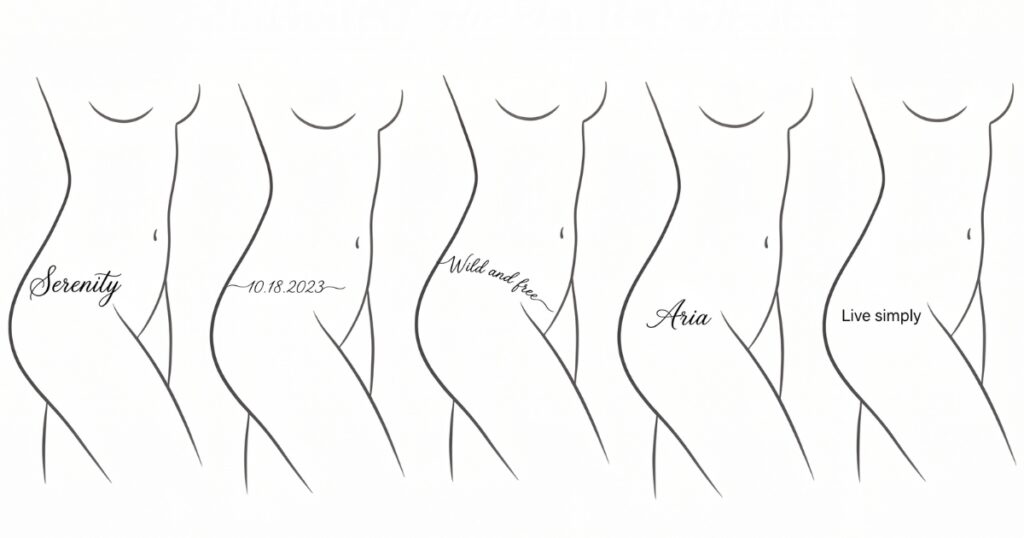
Words can be powerful. Script and quote tattoos let you carry names, dates, lyrics, or short phrases close to your body.
- Who it suits: Anyone who wants personal meaning in words—memorials, milestones, favorite quotes, or song lyrics.
- Typical size & style: Small to medium. Curved text along the hip bone, side hip, or just above/below the hip.
- Design tip: Choose a font that’s readable and will age well; overly fancy scripts can blur over time.
Mandalas & Ornamental Designs
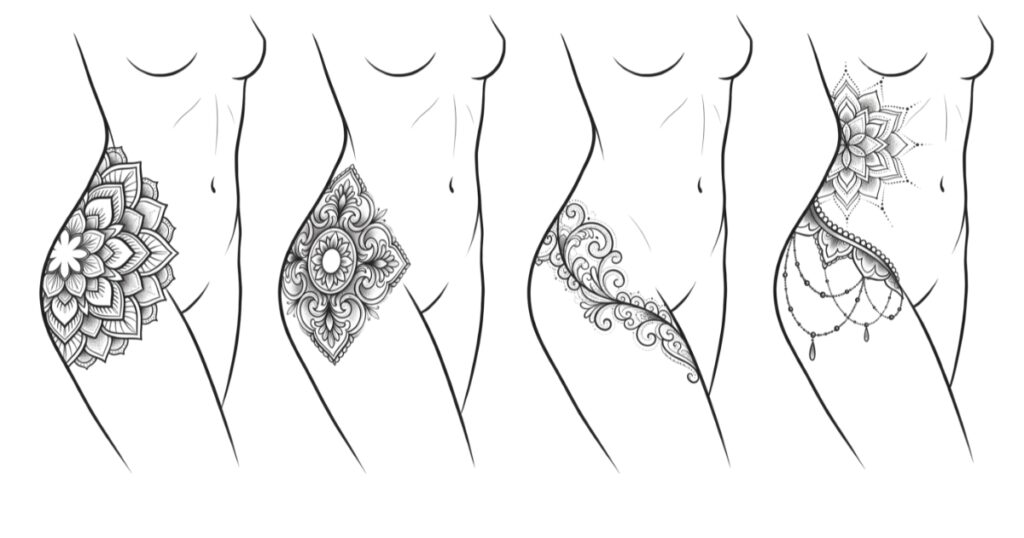
Mandalas and ornamental tattoos are detailed, decorative, and often symmetrical. They can look almost like jewelry for your body.
- Who it suits: People who like intricate, spiritual, or decorative designs. Great if you want something that draws the eye.
- Typical size & style: Medium to large. Centered on the side hip or front hip bone, sometimes extending toward the thigh or lower back.
- Design tip: These designs often benefit from a bit more space, so consider a slightly larger size if you can.
Animal & Nature-Inspired Designs
Animals and nature symbols are popular for people who feel a connection to certain creatures or elements (forests, oceans, mountains, etc.).
- Who it suits: Animal lovers and nature enthusiasts. Also good for people who want symbolic meaning (strength, freedom, transformation).
- Typical size & style: Varies. Small single animals (birds, butterflies) or larger scenes (wolves, lions, trees, waves) that flow with the body.
- Design tip: Think about how the animal’s shape can follow your hip curve—for example, a bird in flight or a winding vine.
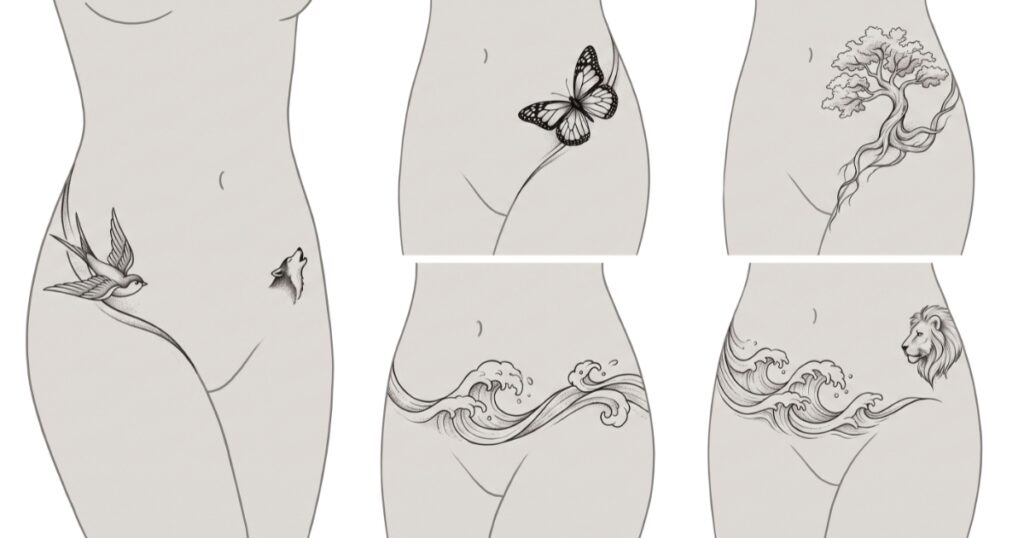
Hip-to-Thigh Flow Tattoos
These are larger pieces that start on the hip and continue down the thigh (or around to the lower back). They create a dramatic, flowing look.
- Who it suits: People who want a bolder, more statement tattoo. Good if you’re comfortable with a more visible piece.
- Typical size & style: Medium to large. Vines, florals, ornamental work, or custom scenes that move from hip to thigh.
- Design tip: Plan the design while standing so your artist can see how it flows with your natural posture.

More Hip Tattoo Ideas to Consider
Here are additional concepts you can mix and match with the styles above:
- Butterflies or moths – symbolizing change and transformation.
- Stars, moons, and celestial designs – for a dreamy, mystical vibe.
- Feathers or wings – representing freedom and lightness.
- Snakes or dragons – for a bolder, more powerful look.
- Abstract brushstroke or watercolor styles – for an artistic, painterly feel.
- Tiny symbols – hearts, arrows, infinity signs, or custom icons.
- Dates or coordinates – marking a special day or place.
- Custom portraiture or fine-line illustrations – for a unique, personal piece.
Quick recap:
- Best for first-timers: Minimalist line art, small florals, tiny symbols.
- Best for bold looks: Hip-to-thigh flow, large mandalas, ornamental pieces.
- Best for personal meaning: Script/quotes, symbolic animals, milestone dates.
Where to Place a Hip Tattoo
“Hip tattoo” can mean several different spots, and each affects visibility, pain, and design choice. Knowing the main placement options helps you pick a design that fits your lifestyle and comfort level.

Side Hip
The side hip is the area along the outer curve of your pelvis, between your waist and upper thigh.
- Visibility: Often hidden under regular clothes, more visible in bikinis, shorts, or crop tops.
- Best designs: Medium pieces, florals, geometric patterns, script that follows the curve.
- Why choose it: Good balance of privacy and showability; comfortable for many people compared to the hip bone.
Front Hip Bone
This is the area directly over the front of your hip bone (iliac crest), often visible with low-rise pants or swimwear.
- Visibility: Can show with low-rise pants, crop tops, or swimwear; easier to notice than side hip.
- Best designs: Centered designs (mandalas, symbols), small to medium pieces that sit neatly over the bone.
- Why choose it: Great for statement pieces you don’t mind people seeing in certain outfits.
Just Above / Below the Hip Bone
These are the narrow zones right above or below the hip bone, often used for smaller, delicate tattoos.
- Visibility: Depends on clothing; often easy to hide or show as needed.
- Best designs: Small symbols, dates, short script, delicate lines, micro tattoos.
- Why choose it: Ideal if you want something subtle and easy to conceal but still close to the hip area.
Hip Wrapping Toward Thigh or Lower Back
This includes designs that start on the hip and flow toward the thigh, lower back, or even around to the stomach.
- Visibility: More noticeable in certain outfits (shorts, skirts, swimwear); can be partially hidden with longer tops.
- Best designs: Larger flowing pieces, vines, ornamental work, hip-to-thigh designs, custom scenes.
- Why choose it: Perfect for dramatic, body-hugging designs that accentuate your curves.
Placement at a glance:
- Want it mostly hidden? → Side hip, just above/below hip bone.
- Okay with it showing in swimwear or low-rise clothes? → Front hip bone, hip-to-thigh, hip-to-back.
Are Hip Tattoos Painful?
It’s normal to wonder how much a hip tattoo will hurt. Pain varies by person, exact spot, and size of the tattoo, but there are some general patterns you can expect.
In short: bone areas tend to be more sensitive, while fleshier areas are usually more comfortable.healthline+2
Hip Bone Area vs Fleshier Side Areas
Different parts of the hip feel different during a tattoo session.
- Hip bone area (iliac crest):
- Usually more sensitive, with a sharper, more intense sensation.
- Common for front hip bone and directly over the bone.
- Many pain charts rate this area as moderate to high (around 6–9/10 depending on the exact spot and your pain tolerance).hyperinkers+2
- Fleshier side areas (outer hip, upper thigh near hip):
- Often less painful, more of a steady pressure or scratching feeling.
- Common for side hip and areas with more muscle/fat.
- Typically rated as moderate (around 4–6/10).xpaintattoo+2
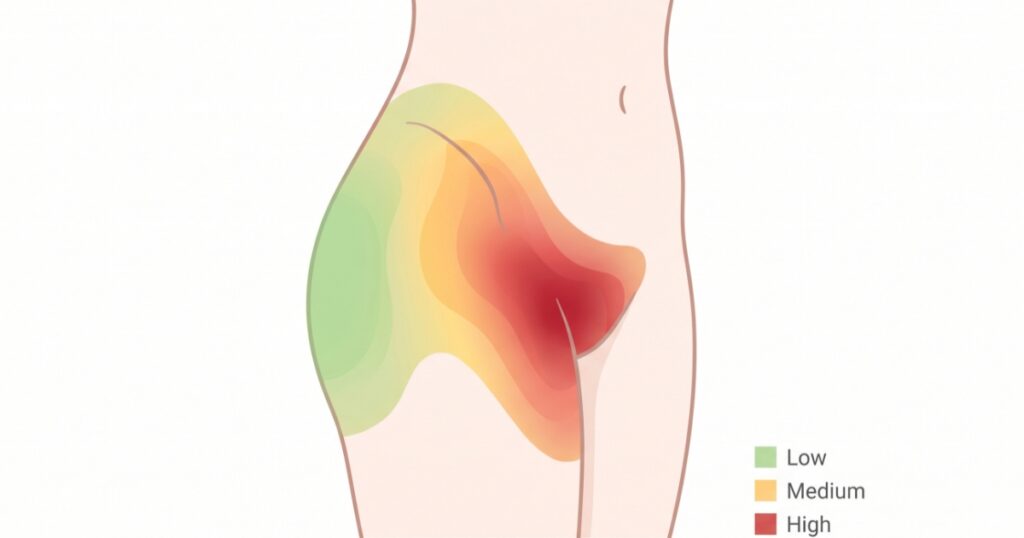
Pain at a glance:
- Most sensitive: Front hip bone, directly over bone, areas moving toward the pelvis/lower stomach.
- Usually more comfortable: Side hip, fleshier outer hip, areas with more padding.
Everyone’s pain tolerance is different, so use this as a guide, not a guarantee.
What to Expect During the Session
Knowing what will happen can make the experience less scary.
- The feeling: Most people describe tattoo pain as a mix of vibration, scratching, and pressure. Over bony areas, it can feel sharper or more intense.
- Session length: Longer sessions can feel more tiring. If you’re worried, start with a smaller design to test your comfort.
- Breaks: You can ask your artist for short breaks if you need them, especially over more sensitive spots.
- Mindset: Being relaxed, well-rested, and fed beforehand can help you handle discomfort better.
Healing Time & Aftercare Basics
Proper aftercare affects how your tattoo looks and how long it lasts. Always follow your artist’s specific instructions, but here are general guidelines.
- Healing timeline (general info, not medical advice):
- Surface healing: Around 1–2 weeks for the outer layer to close and stop peeling.
- Full healing: Several weeks for deeper layers to fully settle.healthline+2
- Basic aftercare steps:
- Keep the initial dressing on for as long as your artist recommends.
- Wash your hands before touching the area.
- Gently clean the tattoo with warm water and fragrance-free soap, then pat dry with a soft cloth or paper towel.
- Apply a thin layer of fragrance-free, alcohol-free moisturizer or aftercare product your artist suggests.
- Avoid soaking the tattoo (no baths, hot tubs, pools) until fully healed; showers are fine.
- Keep it out of direct sun; once healed, use high SPF to protect the ink from fading.
- Don’t scratch or pick at scabs or flakes; lightly tapping can help with itching.
- Wear loose, soft clothing over the area to reduce friction.healthline+1
If you notice signs of infection (excessive redness, heat, pus, severe pain, fever), contact your artist or a healthcare professional.
Meaning & Symbolism of Hip Tattoos
Many people choose hip tattoos not just for looks but for personal meaning. The hip is often seen as an intimate, body-positive area, which adds another layer of significance.

Femininity, Sensuality & Confidence
Hip tattoos are frequently associated with femininity, sensuality, and confidence.
- The hip naturally sways and curves, so tattoos here often emphasize body positivity and self-expression.
- Common designs: florals, ornamental patterns, flowing vines, and soft line work that highlight the body’s shape.
- For many, a hip tattoo is a way to celebrate their body and feel more confident in their skin.spiritualityessence
Personal Milestones & Life Changes
Hip tattoos are popular for marking important moments or changes in life.
- Surgeries or scars: Some people use hip tattoos to cover or reframe scars from surgeries (like hip labrum surgery), injuries, or other medical experiences.
- Major life events: Graduations, overcoming struggles, weight loss, new chapters, or memorials for loved ones.
- Design ideas:
- Dates or coordinates of meaningful places.
- Short scripts or quotes that remind you of your journey.
- Transformative symbols like butterflies, phoenixes, or waves.
Symbols of Strength, Freedom & Self-Love
Hip tattoos can also represent inner qualities you value or want to embody.
- Strength: Lions, wolves, anchors, shields, armor-like patterns.
- Freedom: Birds in flight, wings, open cages, wind or wave motifs.
- Self-love: Hearts, lotus flowers, affirmations in script, symbols that remind you to be kind to yourself.
Think about what you want your tattoo to remind you of every time you see it.
If you want to symbolize:
- Growth → flowers, trees, vines, sprouting plants.
- Change → butterflies, phoenixes, waves, moons.
- Strength → animals, geometric armor, bold linework.
Tips for First-Timers
Getting a tattoo—especially in a sensitive area like the hip—can feel like a big step. A bit of preparation goes a long way.
Choose a Reputable Artist & Studio
Your artist and studio matter as much as the design.
- Check reviews, photos, and hygiene standards.
- Look for artists who show hip tattoo examples in their portfolio.
- If possible, visit the studio beforehand to see the space and ask questions.
Review Portfolios & Styles
Not every artist specializes in every style.
- Match the artist’s strength to your desired design:
- Fine line/minimalist → look for clean, delicate work.
- Geometric/ornamental → check symmetry and detail.
- Realism/illustrative → review shading and depth.
- Save 3–5 reference images to show your artist what you like (poses, flow, size, etc.).
Think About Clothing & Visibility
Be honest with yourself about how visible you want the tattoo to be.
- Consider your job, family expectations, and personal comfort.
- Decide if you want it:
- Easy to hide (side hip, just above/below hip bone).
- Okay to show in certain outfits (front hip bone, hip-to-thigh).
- Think about how it will look with your everyday clothes, gym wear, and swimwear.
Follow Aftercare Instructions Carefully
Aftercare is part of the tattoo process, not an optional extra.
- Good aftercare helps your tattoo:
- Heal properly.
- Keep its shape and color.
- Last longer without blurring or fading.
- Ask your artist any aftercare questions before you leave the studio so you’re clear on what to do.
Don’t Rush the Design Choice
It’s okay to take your time.
- Collect ideas over days or weeks.
- Sleep on the design before booking.
- Get feedback from trusted friends or online communities if you’re unsure.
- Remember: you can always add more tattoos later; your first one doesn’t have to be perfect forever.
Before you book, check:
- I have 3–5 reference images.
- I’ve checked reviews and portfolio.
- I know my preferred placement and approximate size.
Frequently Asked Questions (FAQ)
Are hip tattoos suitable for men?
Yes, hip tattoos are suitable for men as well as women. Men often choose more angular, geometric, or symbolic designs, but the placement options are similar. The main difference is usually style preference rather than suitability.inknationstudio
What size is best for a first hip tattoo?
For a first hip tattoo, small to medium sizes are usually best. They’re easier to heal, generally less painful, and help you get used to the aftercare routine. You can always add more or go bigger later once you know how your body responds.
Do hip tattoos fade quickly?
Hip tattoos don’t inherently fade faster than other tattoos, but friction from clothing and sun exposure can affect longevity over time. Proper aftercare, avoiding excessive rubbing while healing, and using high SPF once healed can help keep the ink sharp. Touch-ups may be needed after several years, as with any tattoo.cosmopolitan
Can hip tattoos cover scars?
Yes, many people use hip tattoos to cover surgical or injury scars, including scars from hip procedures. A skilled artist can design a tattoo that blends with or disguises the scar tissue. It’s best to consult an artist experienced in scar cover-ups and to wait until the scar is fully healed before tattooing over it.
How long do hip tattoos take to heal?
Surface healing for hip tattoos typically takes around 1–2 weeks, while full healing can take several weeks. Exact timing depends on the size of the tattoo, your aftercare routine, and your skin. Follow your artist’s instructions and avoid soaking, scratching, or sun exposure during the healing period.healthline+2
Final Thoughts
Hip tattoos are versatile, personal, and customizable—they can be as subtle or as bold as you want. With the right design, placement, and aftercare, your hip tattoo can be a meaningful piece of art that you enjoy for years.
Save your favorite ideas from this guide, share it with a friend who’s thinking about ink, and explore our other tattoo idea articles for more inspiration. When you’re ready, book a consultation with a trusted artist and turn your chosen design into reality.