
Most tattoos take 2–4 weeks to heal on the surface, but your skin can take 3–6 months to fully recover underneath. The exact timeline depends on factors like the tattoo’s size, placement, your skin type, and how well you follow aftercare instructions.
In this guide, you’ll get a clear, week-by-week healing timeline, a simple aftercare routine you can start today, an explanation of “tattoo flu,” and honest recommendations for aftercare products and kits (including whether something like the Hustle Essentials Tattoo Care Kit is worth it).
Quick Answer: How Long Does a Tattoo Take to Heal?
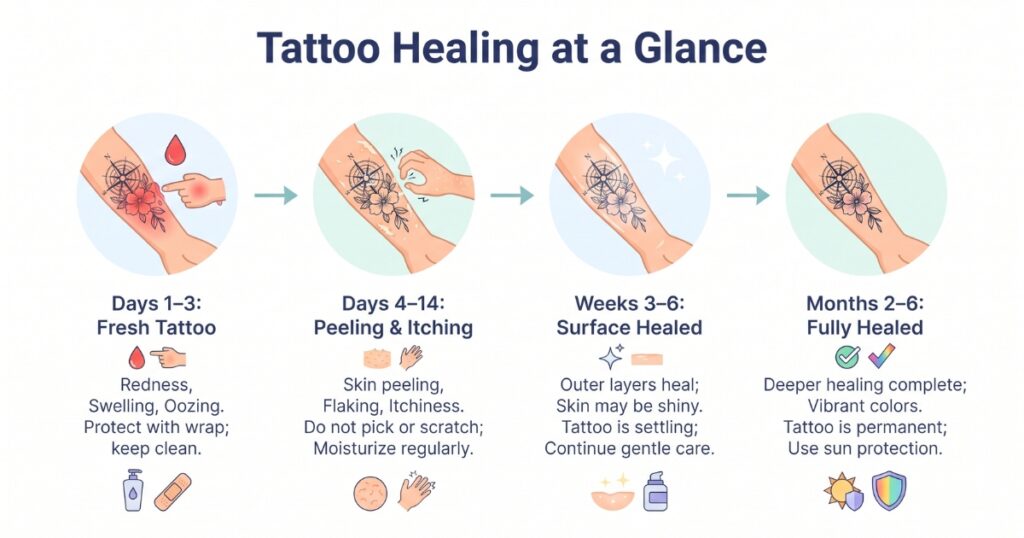
A new tattoo generally follows this pattern:
- Surface healing: About 2–4 weeks
- Full skin recovery: Around 3–6 months
During the first couple of weeks, you’ll notice redness, swelling, oozing, peeling, and itching. By weeks 3–6, the tattoo usually looks healed, but the deeper layers of skin are still repairing. That’s why long-term care (especially sun protection) matters even after the flaking stops.
Healing time can vary based on:
- Size and complexity (large pieces and heavy shading take longer)
- Placement (hands, feet, and joints heal slower due to friction)
- Your skin and health (sensitive skin, eczema, diabetes, or immune conditions can slow healing)
- Aftercare quality (following instructions vs. neglecting the area)
Tattoo Healing Timeline: What to Expect Week by Week
Understanding the stages of healing helps you know what’s normal and when to worry.
Days 1–3: The Initial Healing Phase
Right after you leave the studio, your tattoo is essentially an open wound.
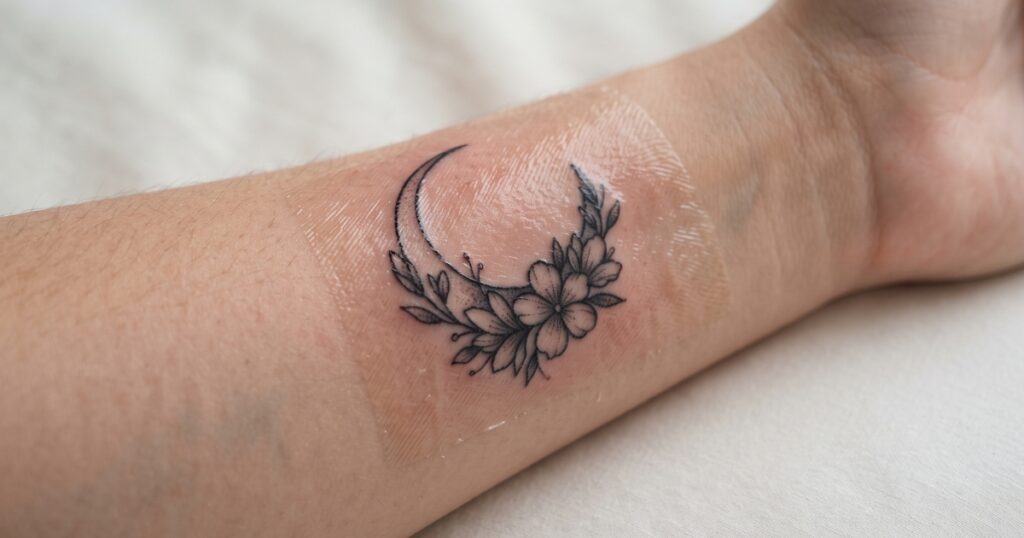
What’s normal:
- Redness and warmth around the area
- Mild to moderate swelling
- Slight oozing of plasma, ink, and blood
- Tenderness when touched or moved
Basic care in the first 24–48 hours:
- Keep the initial wrap on for the time your artist recommends (often 2–4 hours).
- Gently wash with lukewarm water and a mild, fragrance-free soap.
- Pat dry with a clean paper towel (not a bath towel).
- Apply a very thin layer of the ointment your artist suggested.
Red flags to watch for:
- Spreading redness that gets worse after day 2
- Thick yellow/green pus
- Increasing pain, heat, or swelling
- Fever or chills that don’t improve
Days 4–14: Peeling, Flaking, and Itching
Around day 4–5, your tattoo will start to peel and flake like a sunburn. This is your top layer of skin shedding as new skin forms underneath.
What’s normal:
- Flakes of colored skin coming off (don’t pick them)
- Itching, sometimes intense
- Dull or slightly cloudy appearance as the skin regenerates
How to handle it:
- Continue washing 2–3 times per day.
- Switch from heavy ointment to a light, fragrance-free moisturizer (unless your artist says otherwise).
- Use only a pea-sized amount and rub it in gently.
- If it itches, tap the area instead of scratching.
Avoid:
- Picking or peeling flakes yourself
- Using alcohol, peroxide, or scented lotions
- Over-moisturizing (a thick, shiny layer can clog pores and slow healing)
Weeks 3–6: Surface Healed, But Not Fully Recovered
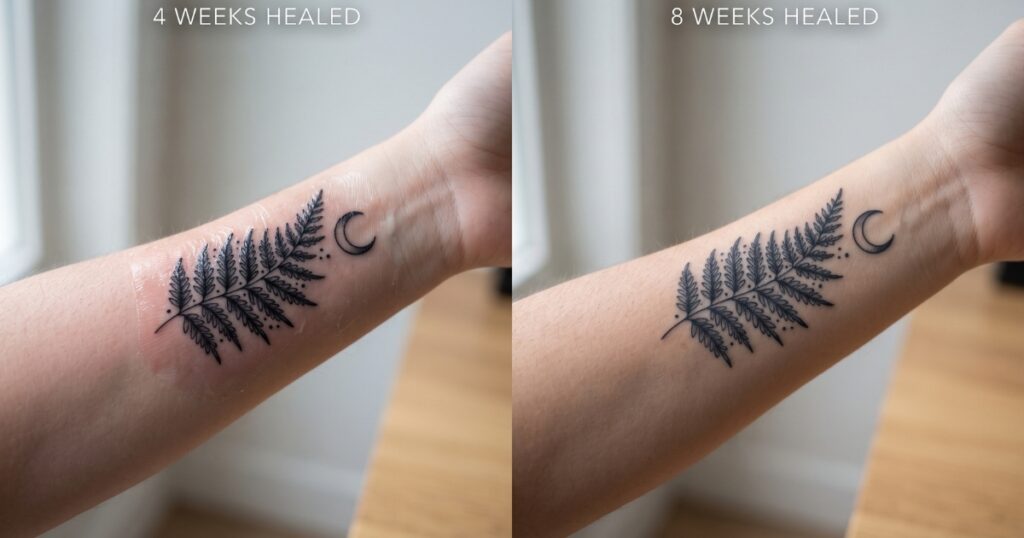
By week 3, most tattoos look healed on the surface:
- No more open areas
- Minimal or no flaking
- Colors appear clearer
However, the deeper layers of skin are still repairing.
What to keep doing:
- Moisturize daily if the area feels dry or tight.
- Avoid direct sun exposure; if you must be out, cover the tattoo with clothing.
- Still avoid swimming pools, hot tubs, oceans, and lakes until the skin is fully closed and no longer shiny or tight.
Most artists say it’s generally safe to resume:
- Normal workouts (as long as you’re not rubbing the area excessively)
- Sun exposure with protection once peeling has fully stopped
But full internal healing is still underway.
Months 2–6: Full Skin Maturation
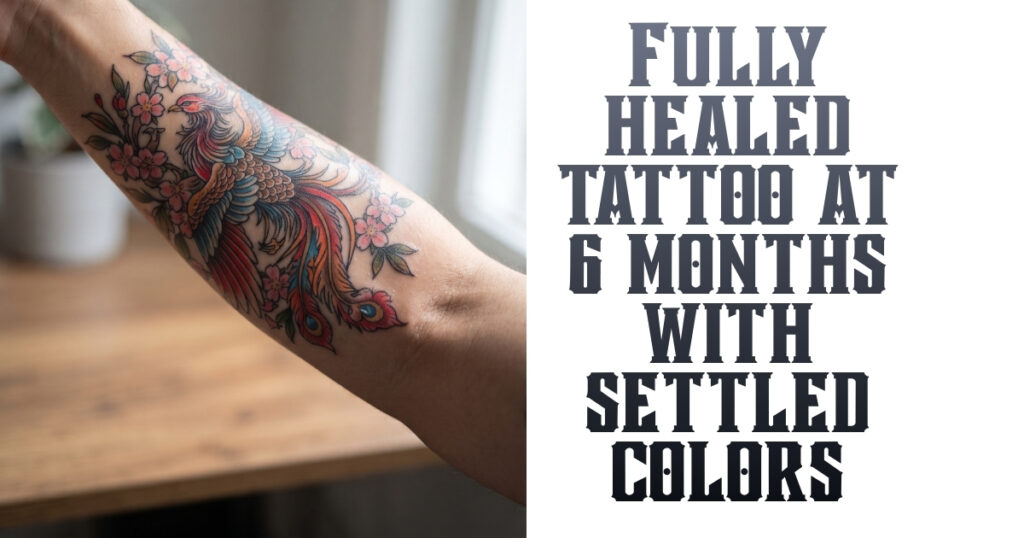
Between 2 and 6 months, your tattoo continues to settle:
- Colors may soften slightly
- Any slight raised texture usually flattens
- The skin becomes more resilient
Long-term care tips:
- Use broad-spectrum sunscreen (SPF 30 or higher) whenever the tattoo is exposed to sun.
- Keep the area moisturized if it tends to get dry.
- Avoid repeated trauma (e.g., constant friction from tight clothing or equipment).
Large pieces, heavy shading, or tattoos on tricky areas (hands, feet, ribs) often take closer to the 6-month end of this range.
Step-by-Step Tattoo Aftercare Routine (2026 Best Practices)
A simple, consistent routine makes a huge difference in how your tattoo heals and how it looks long-term.
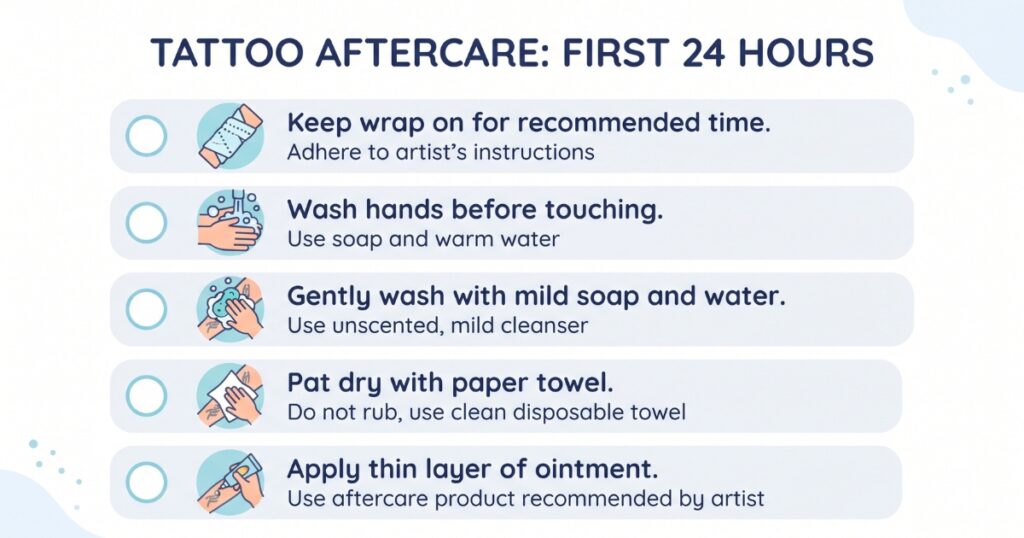
Day 1: What to Do Immediately After Getting Inked
Your artist will give you specific instructions; use these as general guidelines:
- Leave the wrap on for the recommended time (often 2–4 hours).
- Wash your hands thoroughly before touching the tattoo.
- Remove the wrap in a clean environment (ideally at home, not in a dusty gym or street).
- Gently wash the tattoo with lukewarm water and a mild, fragrance-free soap.
- Pat dry with a clean paper towel.
- Apply a thin layer of the ointment your artist suggested (just enough to make it slightly shiny, not gloopy).
First 24 hours checklist:
- Wash 2–3 times
- Reapply ointment after each wash
- Wear loose, clean clothing over the area
- Avoid touching it unnecessarily
Days 2–14: Daily Cleaning & Moisturizing Routine
Morning and evening (and after sweating):
- Wash gently with lukewarm water and mild soap.
- Pat dry with a clean paper towel.
- Apply a thin layer of moisturizer or ointment as advised.
How much product to use:
- Think pea-sized for a small/medium tattoo.
- For larger pieces, use enough to lightly cover the area without it looking wet or greasy.
Common mistakes to avoid:
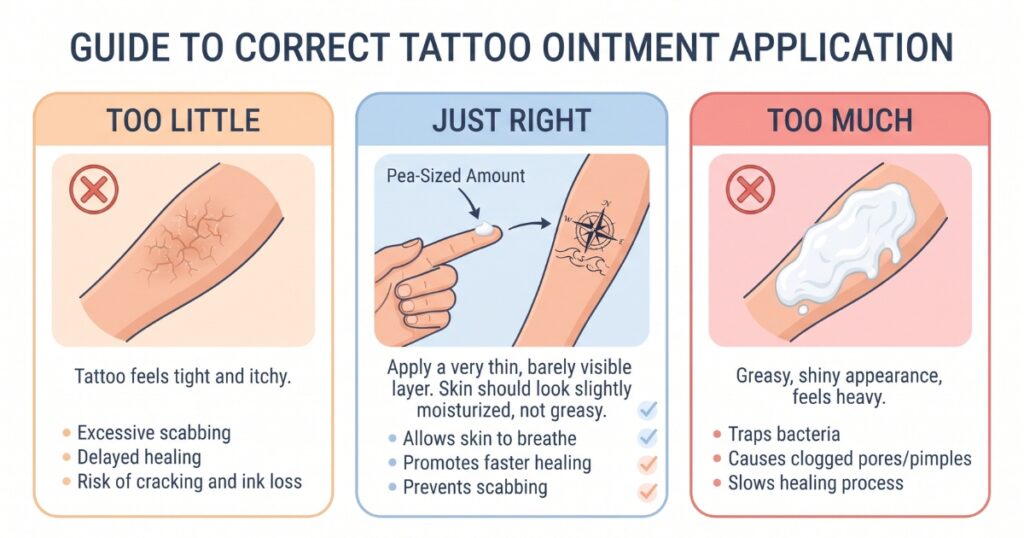
- Over-moisturizing (can trap bacteria and slow healing)
- Using scented lotions, alcohol, or peroxide
- Picking scabs or flakes
- Wearing tight, rough fabrics over the tattoo
What to Avoid While Your Tattoo Heals
To protect your investment, avoid these during the healing period (at least the first 2–4 weeks, ideally longer for sun and swimming):
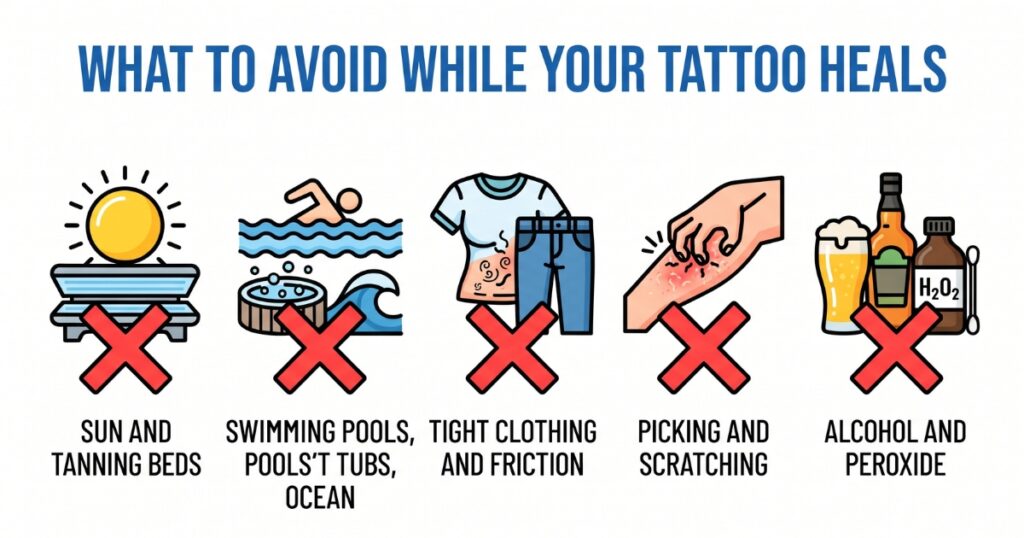
- Sun exposure and tanning beds – UV rays can fade ink and damage healing skin.
- Swimming – Pools, hot tubs, oceans, and lakes can introduce bacteria and chemicals.
- Tight clothing – Especially over high-friction areas (waistbands, bra straps, shoes).
- Heavy sweating in the tattooed area – Modify workouts if needed.
- Picking, scratching, or peeling – Let flakes fall off naturally.
- Harsh products – No alcohol, peroxide, or heavily scented lotions.
Tattoo Flu: What It Is, Symptoms, and How Long It Lasts
Many people feel “off” after a long tattoo session. That’s often called tattoo flu.
What Is Tattoo Flu?
Tattoo flu is your body’s immune response to the trauma of tattooing. Your immune system reacts to:
- The repeated needle punctures
- The ink (a foreign substance)
- The physical stress of a long session
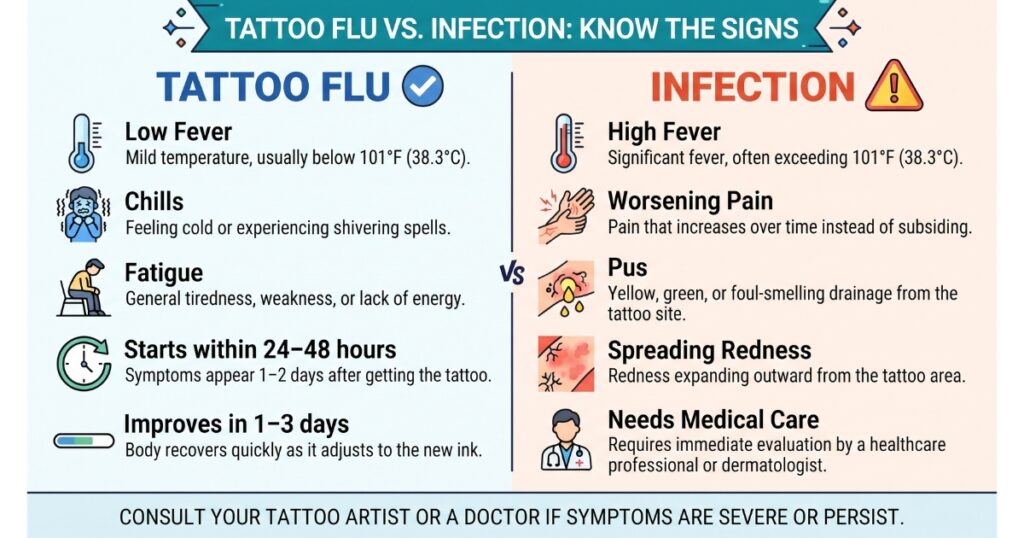
It’s not an infection, but it can feel similar to a mild flu.
Common Tattoo Flu Symptoms
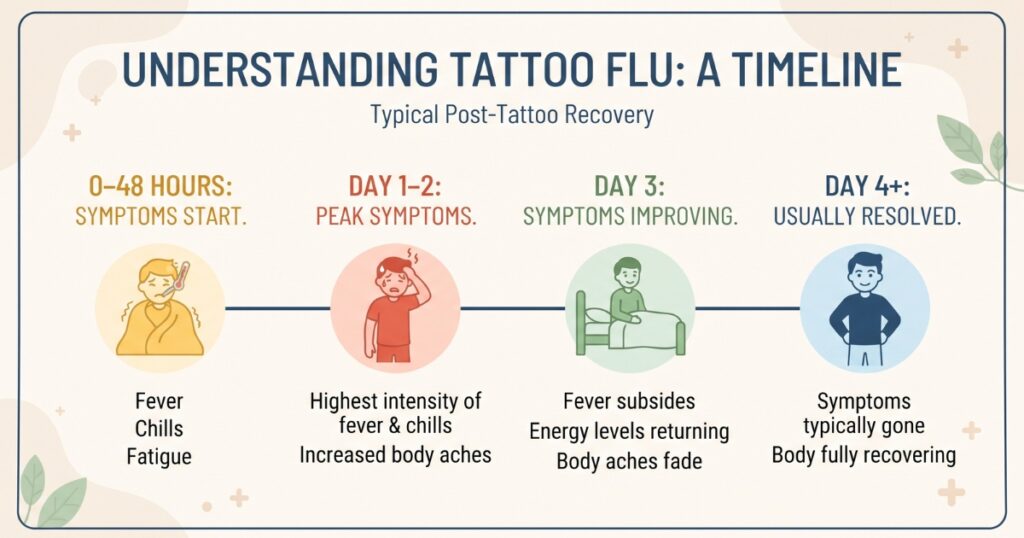
Typical symptoms start within 24–48 hours after your session and may include:
- Low-grade fever
- Chills
- Fatigue or feeling “wiped out”
- Mild body aches
- Slight nausea or headache
These usually peak in the first day or two and then fade.
How Long Does Tattoo Flu Last?
For most people:
- Duration: Around 1–3 days
- Symptoms gradually improve without specific treatment
Rest, hydration, and light meals usually help.
When to See a Doctor
Tattoo flu should be mild and short-lived. Seek medical advice if you experience:
- High fever (over 38.5°C / 101.3°F)
- Fever lasting more than 3 days
- Worsening pain, swelling, or redness at the tattoo site
- Pus, bad odor, or red streaks spreading from the tattoo
- Severe chills, confusion, or feeling very unwell
These can be signs of infection or another complication.
Best Tattoo Aftercare Products & Kits in 2026
You don’t need expensive products to heal a tattoo well, but the right basics help.

What to Look for in a Tattoo Aftercare Product
Good aftercare products are:
- Fragrance-free
- Non-comedogenic (won’t clog pores)
- Simple ingredient lists (fewer irritants)
- Designed to protect without suffocating the skin
Avoid anything with strong scents, alcohol, or harsh actives on a fresh tattoo.
Hustle Essentials Tattoo Care Kit: Pros, Cons & Who It’s For
Kits like the Hustle Essentials Tattoo Care Kit are popular because they bundle everything you need in one place.
What’s usually included:
- A gentle tattoo wash
- A healing ointment
- A light moisturizer
- Sometimes extras like aftercare cards or travel-sized containers
Pros:
- Convenient, especially for first-timers
- Travel-friendly
- Formulated specifically for tattoos
- Removes guesswork about what to buy
Cons:
- More expensive than buying basic products separately
- May not be necessary if you already have suitable soap and moisturizer at home
- Availability can vary by region
Who it’s best for:
- First-time tattoo recipients who want a simple, all-in-one solution
- People who travel often and like compact kits
- Anyone who prefers artist-recommended, tattoo-specific products
If you’re on a budget, you can absolutely heal a tattoo well with basic, fragrance-free products you already own.
Budget-Friendly & DIY Aftercare Alternatives
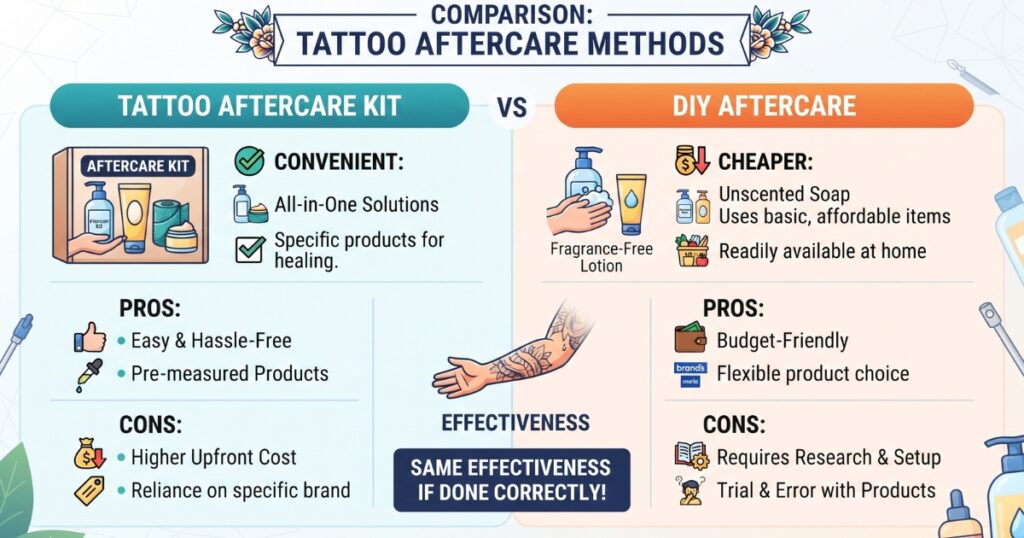
You don’t need a branded “tattoo kit” to heal properly.
Simple, effective routine:
- Cleanser: Any mild, fragrance-free soap (e.g., gentle facial or baby soap).
- Ointment (first few days): A thin layer of a basic healing ointment (e.g., petroleum jelly–based products).
- Moisturizer (after initial days): A light, fragrance-free lotion (e.g., basic sensitive-skin moisturizers).
Options many people use:
- Plain petroleum jelly (used sparingly)
- Simple healing ointments without added fragrance
- Basic sensitive-skin lotions (no retinoids, acids, or strong actives)
Kit vs. DIY: quick comparison
- Cost: DIY is usually cheaper.
- Convenience: Kits are more straightforward.
- Effectiveness: Both can work well if you follow a consistent routine.
Factors That Affect How Fast Your Tattoo Heals

Not all tattoos heal at the same speed. Key factors include:
- Size and complexity:
- Large pieces, heavy shading, and multi-session work take longer.
- Placement:
- High-friction areas (hands, feet, elbows, knees, ribs) heal slower.
- Areas with good blood flow and less movement (upper arm, back, thigh) often heal faster.
- Skin type and health:
- Sensitive skin, eczema, psoriasis, diabetes, or immune conditions can slow healing.
- Smoking and poor circulation can also delay recovery.
- Aftercare quality:
- Consistent cleaning and moisturizing help.
- Picking, sun exposure, and dirty environments hinder healing.
If your tattoo seems to be healing slowly, consider:
- Are you moisturizing appropriately (not too much, not too little)?
- Is the area getting rubbed or irritated by clothing or activity?
- Do you have any underlying skin or health issues that might affect healing?
Common Tattoo Healing Problems & How to Handle Them
Some issues during healing are normal; others need attention.
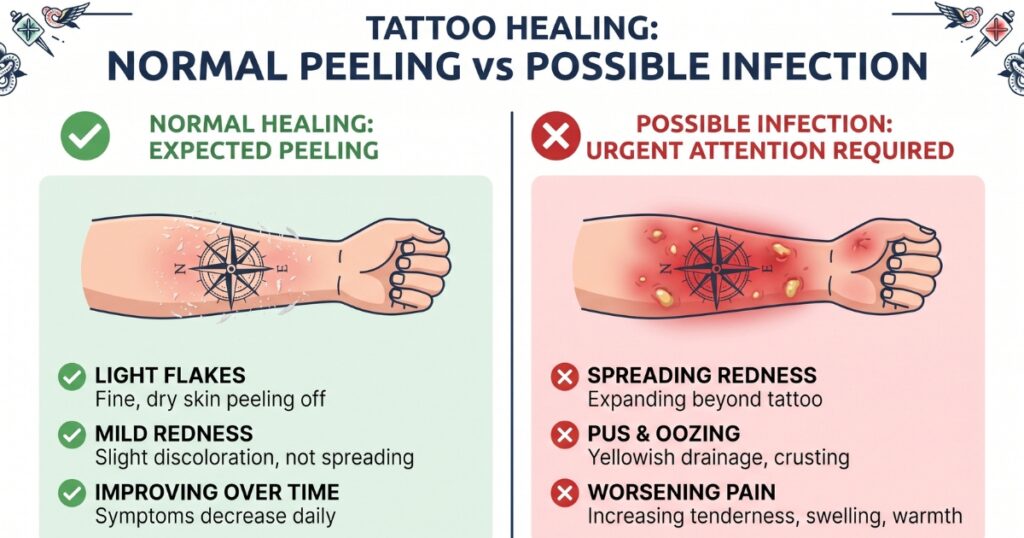
Signs Your Tattoo Might Be Infected
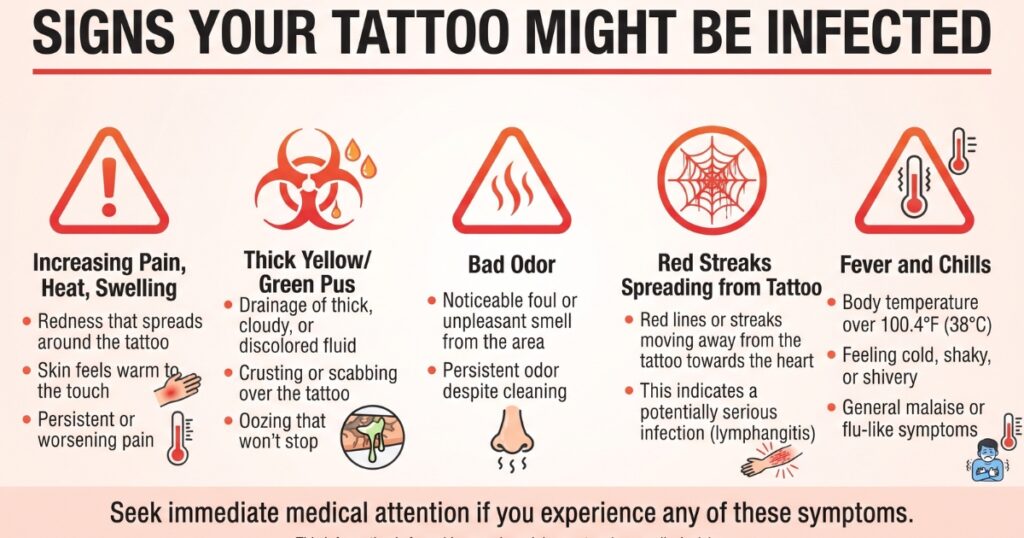
Watch for:
- Increasing pain, heat, or swelling after the first few days
- Thick yellow/green pus
- Bad odor from the tattoo
- Red streaks spreading from the area
- Fever, chills, or feeling generally unwell
Normal healing can include some redness and clear/yellowish plasma, but it should improve, not worsen, after day 2–3.
If you suspect infection, contact your artist and consider seeing a healthcare professional.
Raised, Bumpy, or Blurry Tattoos During Healing
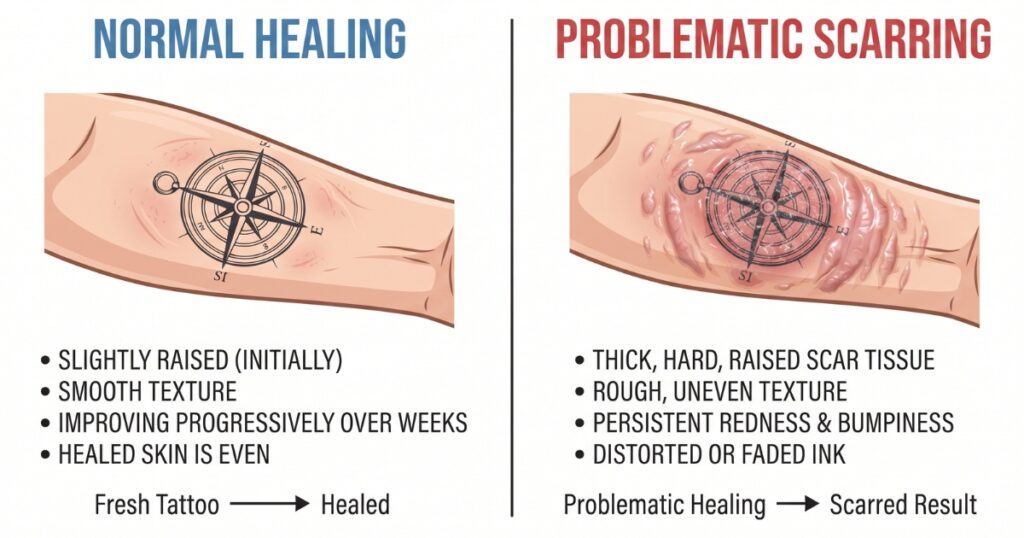
It’s common for tattoos to look:
- Slightly raised
- A bit bumpy
- Temporarily blurry or cloudy
This often happens during the peeling and flaking phase. As the top layer of skin sheds and new skin forms, the tattoo can look uneven.
Usually normal if:
- It gradually improves over weeks
- There’s no severe pain, heat, or pus
- The raised texture slowly flattens
Get it checked if:
- Raised areas become hard, thick, or scar-like
- The blurriness doesn’t improve after several months
- You have persistent itching, rash, or bumps (possible ink allergy)
Allergic Reactions to Tattoo Ink
Some people react to certain ink colors, especially reds and yellows.
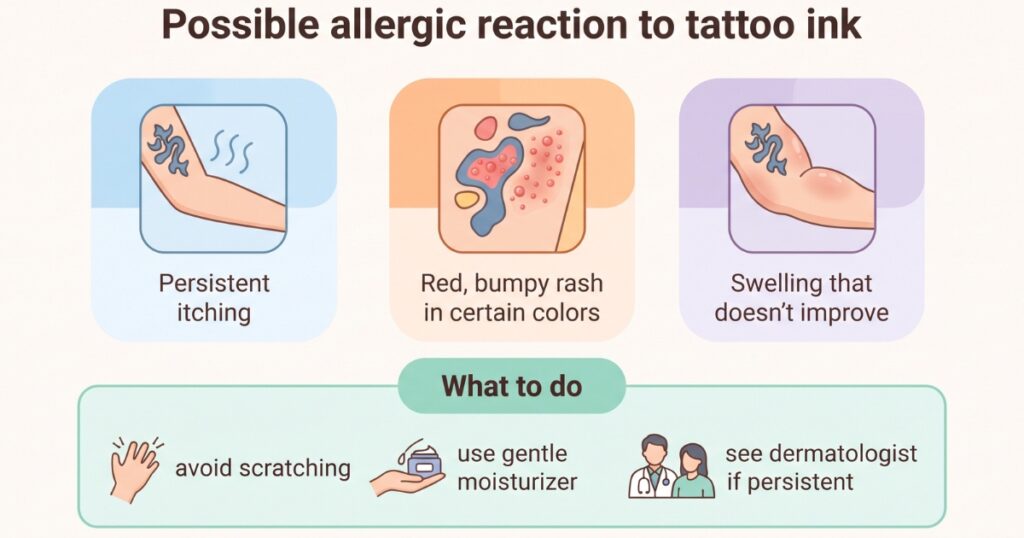
Signs of a possible ink allergy:
- Persistent itching beyond the normal healing period
- Red, bumpy rash limited to certain colors
- Swelling or irritation that doesn’t improve
What to do:
- Avoid scratching or applying harsh products.
- Use only gentle, fragrance-free moisturizers.
- If it persists beyond a couple of weeks, see a dermatologist.
FAQ: How Long Does a Tattoo Take to Heal?
How long does a tattoo take to heal?
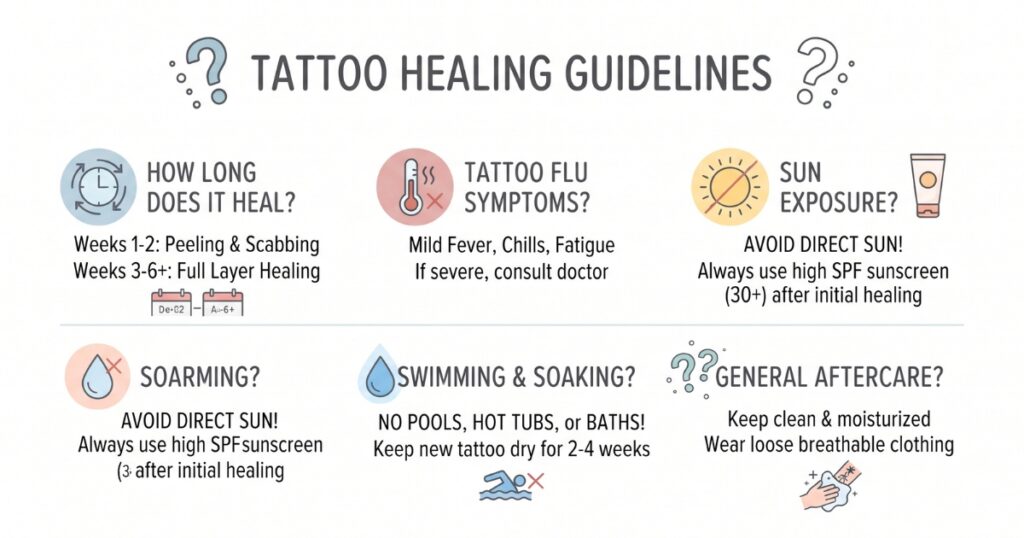
Most tattoos take 2–4 weeks to heal on the surface and 3–6 months for full skin recovery. Smaller, simple tattoos in low-friction areas often heal faster; large or detailed pieces in high-movement areas take longer.
How long does tattoo flu last?
Tattoo flu usually lasts 1–3 days. Symptoms like low-grade fever, chills, fatigue, and mild body aches typically start within 24–48 hours after your session and then fade on their own.
Can I swim with a new tattoo?
Not until it’s fully healed on the surface. That usually means waiting at least 2–4 weeks, and only after all peeling has stopped and the skin no longer feels shiny or tight. Pools, hot tubs, oceans, and lakes can introduce bacteria and chemicals that may cause infection or damage the tattoo.
When can I put sunscreen on a new tattoo?
Wait until the tattoo is fully closed and no longer peeling—typically around 3–4 weeks. Before that, protect it with clothing. Once healed, use a broad-spectrum SPF 30 or higher whenever the tattoo is exposed to sun to prevent fading and skin damage.
Why is my tattoo still red after 2 weeks?
Mild pinkness can be normal, especially for larger or more traumatic tattoos. However, if the redness is:
- Getting worse
- Hot to the touch
- Painful
- Accompanied by pus or fever
it could be a sign of infection and should be checked by a professional.
What’s the best ointment for a new tattoo?
The best ointment is one that’s:
- Fragrance-free
- Simple in ingredients
- Recommended by your artist
Many people use basic petroleum jelly–based ointments for the first few days, then switch to a light, fragrance-free moisturizer. Branded tattoo ointments can work well, but you don’t need anything overly expensive.
Is the Hustle Essentials tattoo care kit worth it?
It can be worth it if you:
- Want a simple, all-in-one solution
- Are a first-timer and prefer tattoo-specific products
- Travel often or like compact kits
If you’re on a budget or already have gentle soap and moisturizer at home, you can heal your tattoo effectively with basic, fragrance-free products instead.
Final Thoughts: Take Care of Your Tattoo for the Long Term
Your tattoo’s healing journey doesn’t end when the flaking stops. Surface healing takes about 2–4 weeks, but full recovery happens over 3–6 months. The biggest factor in how well and how fast your tattoo heals is consistent, gentle aftercare and protecting it from sun, friction, and dirty environments.
If you’re planning more ink, you might also want to explore:
- The 444 tattoo meaning for spiritual and angel-number symbolism
- The lotus flower tattoo meaning for themes of rebirth and resilience
- The poison tree tattoo meaning for darker, mythological designs
And if you’re curious about doing your own work down the line, start by learning about equipment like a coil tattoo machine and proper safety practices.
For now, focus on keeping your new tattoo clean, lightly moisturized, and protected. That care is what turns a fresh piece into a lifelong one.